


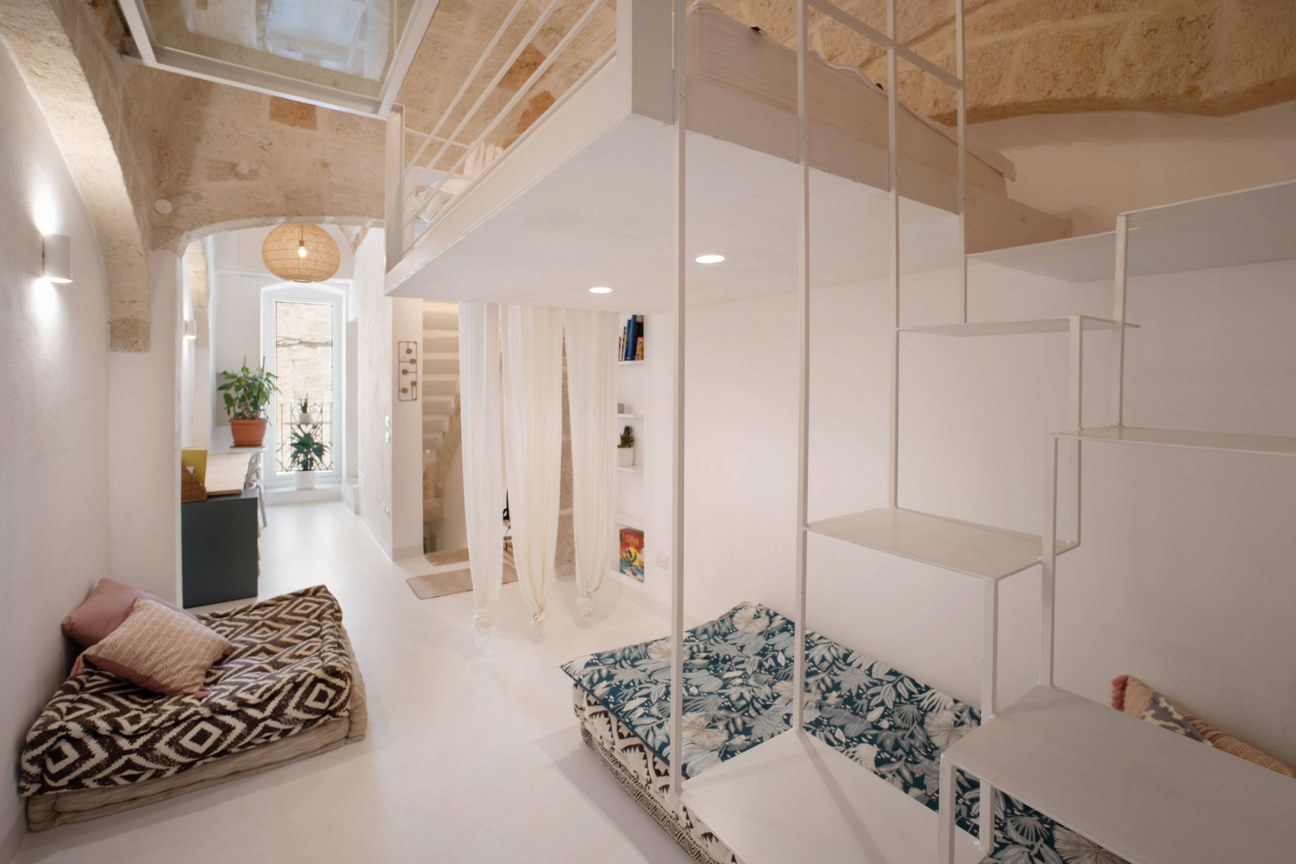
Search availability and book now your next holiday in Puglia
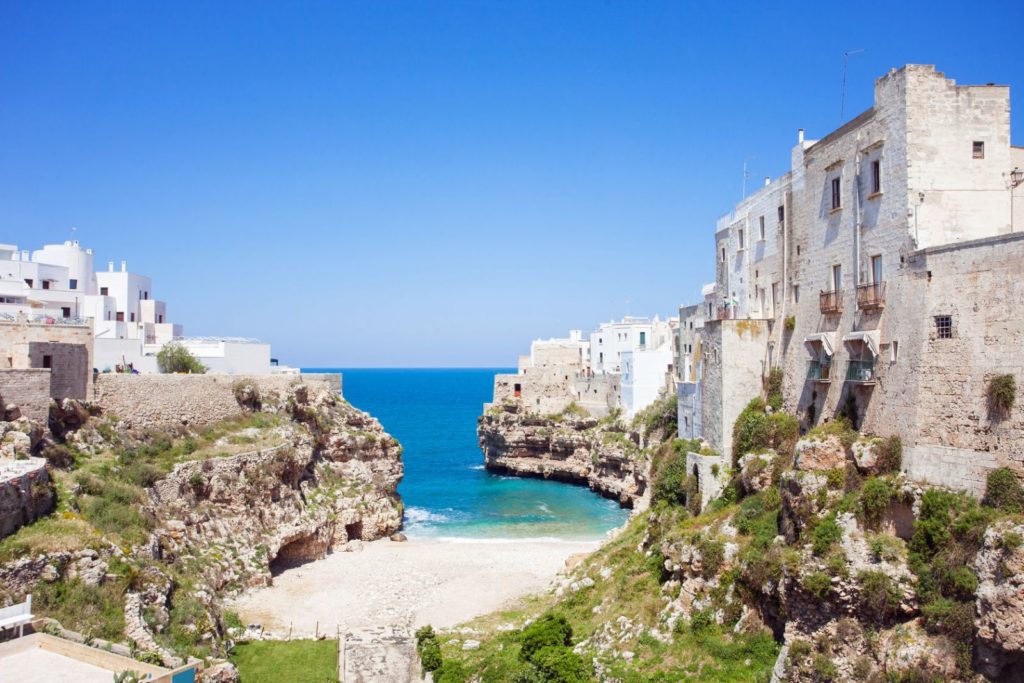
Polignano a Mare rises on a blade of limestone rock that the Adriatic has carved into sea caves and sheer drops, and its historic centre seems to grow out of the cliff itself: white houses and terraces perched over the void, alleys ending in an intense horizon of blue. At Lama Monachile, the sea enters between two stone walls, beneath the arch of the bridge, lapping at a beach of smooth pebbles that glistens like wet glass. Further along, coves open up between rocks and sea stacks, and each year the contenders of the Red Bull Cliff Diving plunge from these cliffs, drawn by an unmatched setting. Domenico Modugno was born here, and the town dedicates a statue to him with arms wide open towards the open sea, just as in his Volare. To the south, in San Vito, an ancient abbey overlooks the sea beside a sheltered little harbour, where the air is scented with sea salt.
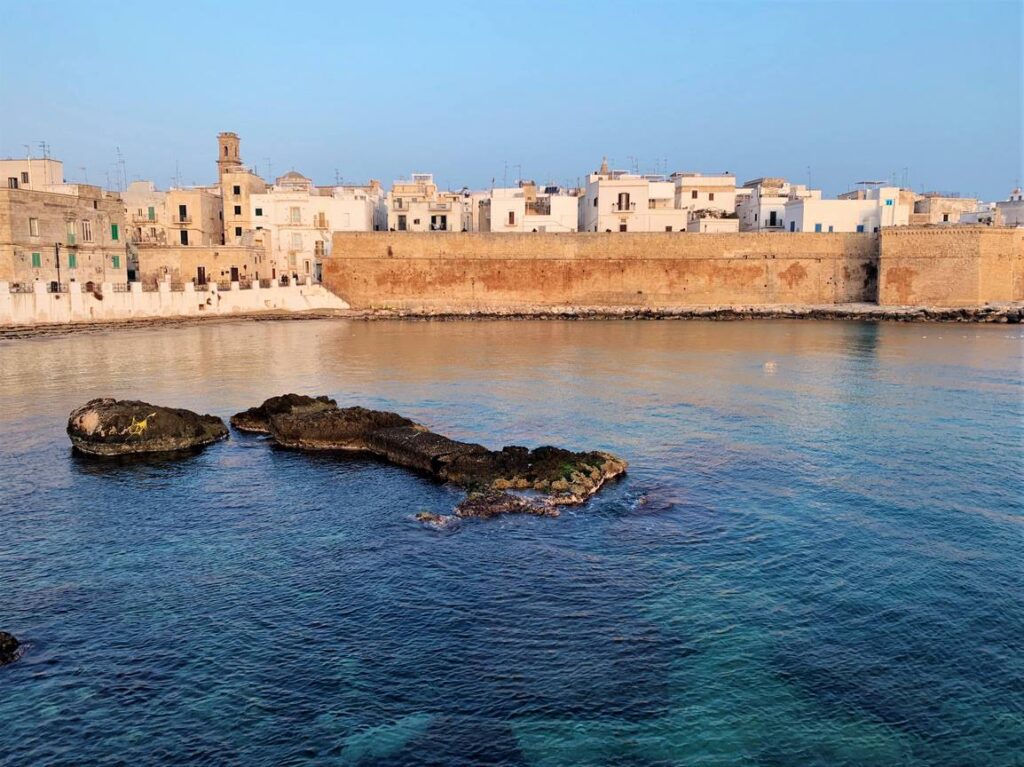
Monopoli is best approached from the sea, with the Adriatic light guiding every step past pale stone houses and alleys that open suddenly onto the water. The Porto Vecchio is its point of arrival and return: traditional gozzi boats painted in blue, red, and green rest alongside the walls, while nets dry in the sun and the voices of fishermen fill the early hours of the day. At sunset, the façades turn honey-coloured over the harbour waters. A little further south, at the entrance to the old town, Cala Porta Vecchia is a small beach tucked between the ramparts, where you swim amidst stone and waves. In the historic centre, votive shrines dot the street corners, a tribute to Maria Santissima della Madia, whose icon, according to tradition, arrived from the sea. Outside the walls, a countryside of ancient olive trees slopes gently and orderly towards the shore. And from the bakeries and local shops rises the scent of bread and the catch of the day, the flavour of a coastline that reveals itself at every turn.
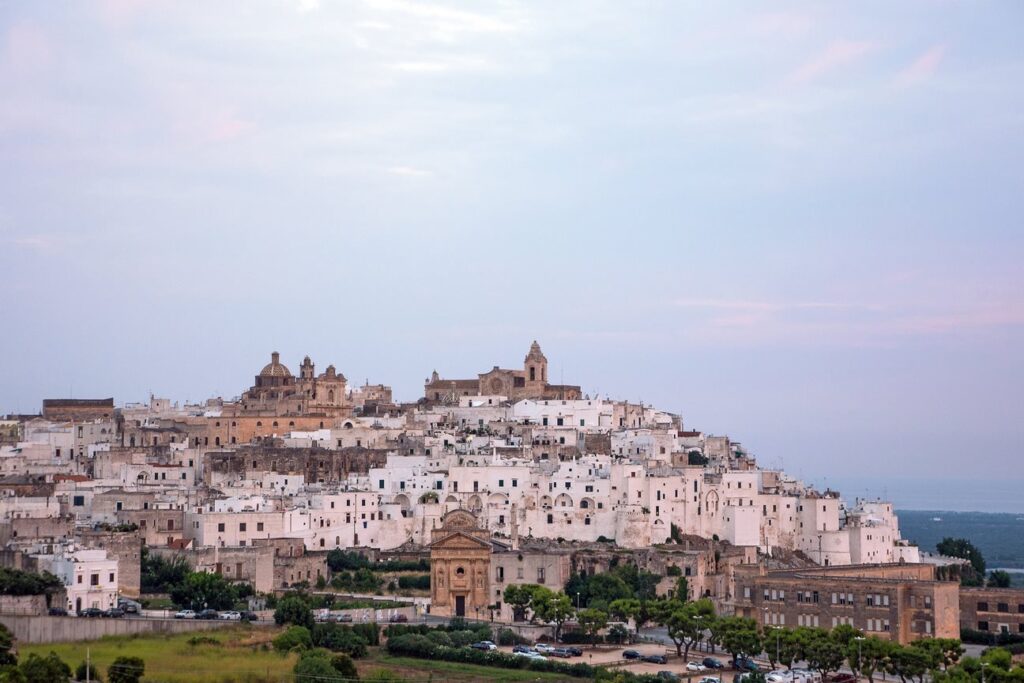
The Valle d’Itria is an undulating plateau where red earth is divided into fields, vineyards, and olive groves, held together by miles of dry-stone walls, and where trulli emerge among the hills with their grey stone cones. In Alberobello they gather by the hundreds, in compact districts that look as though they were sculpted by a single hand. Locorotondo sits in a circle along the ridge, with its pitched cummerse roofs and flower-filled balconies overlooking the countryside, while Cisternino preserves narrow, vaulted alleys fragrant with embers and fornelli butcher-grills. Ostuni, the White City, gleams with limewash atop its hill, dominating olive groves and sea from afar. Between the masserie, roads run low amidst the rows of vines. In the evening, the dry-stone walls release the warmth of the day, carrying a scent of dry grass and oregano. Here, the light shifts with the hour, gliding from the green of the vineyards to the ochre of the fields, and the landscape unfolds around every bend like a silent discovery.
Ask for Information


